Everything you need to know before visiting Oktoberfest, Munich – dates, hotels, what to see & do, tips and more!

In addition to a quick overview of the event’s history, we’ve compiled important information so you know what to expect and how to prepare – including dates, popular rides, the best restaurants/tents, how to make reservations, where to stay and other essential tips for your visit to Oktoberfest!
Regarded as one of the most legendary celebrations in Europe, Oktoberfest attracts millions of tourists every year. Based in Munich, the largest and most important city of the Free State of Bavaria, in Germany, this colossal event is a gigantic celebration of Bavarian culture, traditions and customs. Plus, it’s also famously associated with beer… like, lots and lots of beer!
However, don’t be fooled into thinking Oktoberfest it’s only about drinking yourself to oblivion. In addition to its absolutely contagious atmosphere, here you’ll find traditional costumes, tourist attractions and even fun rides, culminating in an event that is equal parts country fair, amusement park and ethnographic open-air museum. It’s rowdy, it’s busy and it’s certainly over-the-top… but it’s also one of those events that everyone should attend at least once in their lifetime!
That said, if the Fall is coming near and you already have a trip booked for Oktoberfest, we want to help. In addition to a quick overview of the event’s history, we’ve compiled important information so you know what to expect and how to prepare – including dates, popular rides, the best restaurants/tents, how to make reservations, where to stay and other essential tips for your visit to Oktoberfest!
Oktoberfest travel guide, Munich

What is Oktoberfest?
Considered the largest folk festival (“Volksfest” in German) in the world, Oktoberfest is a gigantic annual event that attracts millions of participants, both locals and tourists alike! As you’ve surely seen in the media, the festival is extremely well known for its traditional Bavarian costumes and – above all – for the beer… lots of it! Centered around enormous tents serving beer in monumental one-liter mugs, the fair is a true showcase of Bavarian culture and traditions, featuring fair rides, cultural performances, folk music concerts and restaurants serving all the food staples from this part of Germany.
That said, and despite its uber popularity, Oktoberfest is not actually as old as one might think, with the very first edition having taken place in 1810 (200 years is nothing by European standards). In October of that year, Prince Ludwig I of Bavaria married Princess Therese of Saxe-Hildburghausen, in a celebration of epic proportions that was partially open to commoners. The festivities were so big and so well received that they became an annual tradition, held every September/October in the very same location where the Bavarian people gathered for the wedding (Theresienwiese).
Naturally, the event grew and evolved over the years, with different attractions and traditions – such as the tents run by the most historic breweries in Munich – becoming part of Oktoberfest until it eventually turned into a two-week affair. In addition, the festival was moved to start in mid-September to maximize the chances of good weather. Truth be told, these changes worked for the best, as Oktoberfest has earned a special place in the hearts of the Bavarian people and in the minds of travelers from all over the world, who keep flocking here to experience a unique celebration of monumental proportions.
When does Oktoberfest take place?

As mentioned above, Oktoberfest takes place every single year, starting in mid-September and ending precisely on the first Sunday of October. Usually, the whole event lasts for about 16 to 18 days.
In 2025, Oktoberfest will go from September 20 to October 5.
How to get to Oktoberfest, Munich

Considering this is the third biggest city in Germany, it comes as no surprise that Munich is served by no less than 2 international air hubs: the Franz Josef Strauss Airport and the Memmingen Airport, located about 100km away from the city.
As such, if you’re traveling from Ireland, it is possible to fly directly to Franz Josef Strauss from Dublin (Aer Lingus and Lufthansa), Cork (Aer Lingus). On the other hand, there are flights to Memmingen from Dublin with Ryanair.
However, it is equally important to highlight how to make it to Theresienwiese, where Oktoberfest takes place. Fortunately, the park is located just 2km away from the Old Town, so you can walk there easily. On the other hand, if you want to save some energy or are staying in a different part of the city, there are plenty of metro stations around the area. For starters, the main entrance is located next to the Theresienwiese metro (U-Bahn) station, served by lines U4 and U5. If you need to use a different entrance, then you can choose the metro stops Schwanthalerhöhe, Poccistraße and Goetheplatz, served by lines U3 and U6.
As for tickets, fares will depend on the number of zones you cross throughout your journey. However, as a tourist, you probably won’t get out of “Zone M”, which encompasses the entire city center and the neighboring districts. In that case, a single trip costs €4,10, allowing you to do as many transfers as you need within 2 hours (so as long as you don’t leave Zone M). However, if your journey goes through 4 stops or less, you may get a Short Trip Ticket for €2,00. Also, keep in mind all tickets should be validated upon boarding, although you can save yourself the hassle and choose a pre-validated ticket if you get yours from an automatic machine (it costs the same). Alternatively, you can buy a digital ticket from the MVV app.
Where to sleep during Oktoberfest – Hotels in Munich
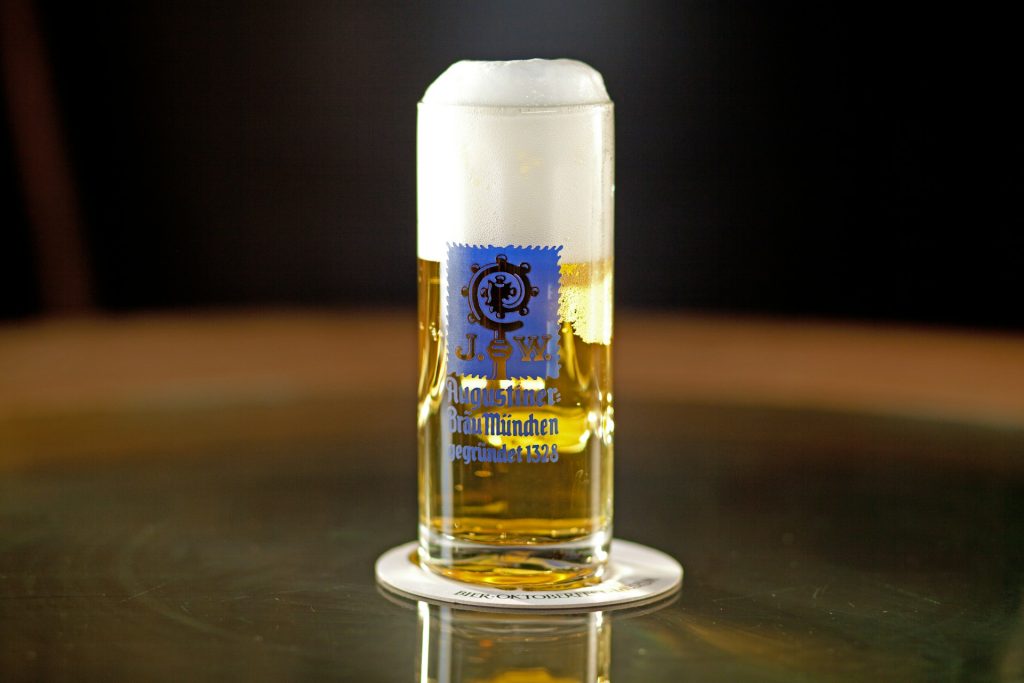
Get ready to spend a small fortune, since accommodation rates in Munich (and even in neighboring cities) during Oktoberfest are downright ludicrous. Unsurprisingly, as Bavaria gets flooded with visitors during this time of the year and supply is rarely enough, which drives prices up. As such, it is strongly recommended to book your accommodation well in advance. In fact, there are reports that some hotels even sell out 1 year in advance!
That being said, here are a few hotel options which have passed our value-for-money test:
- Hostel – Euro Youth Hotel Munich
- € – ibis München City Süd
- €€ – Holiday Inn Munich City Centre by IHG
- €€€ – Residence Inn by Marriott Munich Ostbahnhof
- €€€€ – Hotel München Palace
Where to eat during Oktoberfest – Tents and Street Food

As expected, eating and drinking is a fundamental part of Oktoberfest (especially the latter). Restaurants are set up inside large tents filled with communal tables, themed decorations and a festive atmosphere at any time of the day or night. Needless to say, all of the most famous and traditional breweries in Munich have their own tent at the event. Among the most popular venues, the following usually stand out:
- Festzelt Tradition
- Hofbräu Festzelt
- Löwenbräu-Festhalle
- Hacker-Festzelt
- Paulaner Festzelt
- Ochsenbraterei
- Armbrustschützen-Festhalle
- Augustiner-Festhalle
- Schottenhamel
In total, Oktoberfest features 20 large tents and 14 smaller ones, as well as a few separate beer gardens and street food stalls. Overall, the experience is quite similar across most venues. Yes, the décor might be a bit different, but if you find a seat in a tent you like, we strongly recommend not passing it up thinking there might be a better spot elsewhere. On average, you can expect to pay around €15,00 for a liter of beer and between €20,00 to €30,00 for the food. On weekdays, some venues also offer special lunch menus for €15,00. Among the local specialties you can expect to find in Oktoberfest, there are traditional German dishes such as pork knuckle, wurst with sauerkraut, pork schnitzel or Brotzeit, a special platter with cold appetizers and spreads. An Oktoberfest classic, pretty much every single tent serves roast chicken (€17,50) as the staple dish to go along with your beer.
Alternatively, you can simply choose one of the countless wooden stalls and go for something simpler, quicker and more affordable – but still quintessentially Bavarian – like pretzels, hot dogs and bread rolls filled with herring, schnitzel or Leberkäse (pork loaf).
Do you have to book in advance to eat at Oktoberfest?

This is somewhat of a contentious topic and one that often confuses visitors. However, to be very clear, it is not necessary to book a table at Oktoberfest. The only real exception applies to groups of at least 10 people visiting the grounds on a weekend, since getting a seat is not all that difficult for couples, individuals and smaller groups. It’s true you might have to wait a bit on the busiest nights, but still nothing you can’t handle. Furthermore, there are specific sections for visitors without reservations, so you never run the risk of not having a seat because everything is booked out.
That said, if you want to play it safe and book a spot, keep in mind that the tents only accept reservations for an entire table (10 people). This means that if your group is smaller, you’ll still need to cover the cost of the empty seats. On average, a group of 10 people is expected to spend between €300 to €400 when sitting inside a tent, so that’s the amount you should be ready to pay for your group if you make a reservation, regardless of how many people are actually coming. This minimum consumption amount is paid at the time of booking, and you will be given vouchers to use at the tent.
If you’re thinking about making a reservation… well, good luck! Unfortunately, there’s no centralized booking system, so you’ll have to decide which tent you want to visit and then contact them directly to secure a table. Although we won’t be covering all 30+ tents individually, here’s how you can book your group a place at a handful of selected tents:
- Festzelt Tradition: Online
- Hofbräu Festzelt: Online
- Löwenbräu-Festhalle: E-mail, at [email protected]
- Paulaner Festzelt: Online
- Ochsenbraterei: Online, with extremely limited spots made available 2 days in advance
What to do at Oktoberfest – Beer, Traditional Costumes and Rides

As you’ve probably gathered by now, drinking industrial amounts of beer is arguably the main activity at Oktoberfest. As it so often happens at most traditional folk fairs, the experience is mostly about soaking up the festive atmosphere, rather than having a long list of things to see and do. That said, there are always a number of attractions and activities you should look out for to experience Oktoberfest in all its glory!
Although we’ve already highlighted some tent options above, it’s worth pointing out the most beautiful venues and those with the best atmosphere. The crème de la crème, so to speak. Although each tent has its own decoration and color scheme, standouts include Hacker-Festzelt, Ochsenbraterei, Festzelt Tradition, Augustiner-Festhalle and – of course – Hofbräu Festzelt (although it is by far the most touristy). You’ll also likely come across live music performances, ranging from traditional folk bands to yodeling groups.

As for the most popular rides, it’s usually more about their historical or symbolic charm than about the thrills, having become true icons of the event and holding a special place in the memories of the local population. Some of the most sought-after attractions include the Wellenflug (€7,00), Feldl’s Teufelsrad (€5,00 – an hilarious spinning platform where the goal is to see who can stay on the longest), the Willenborg Ferris Wheel (€10,00), the Olympia-Looping (€12,50) or the Toboggan (€6,00). Though perhaps not the most politically correct observation, the truth is that the alcohol excess makes the rides even more entertaining… both for those rising on and for those watching!
Although admission to Oktoberfest is free, there’s a specific section of the grounds that requires a ticket to enter. With entry priced at just €4,00, the Oide Wiesn is the festival’s nostalgic, historic quarter, home to vintage amusement rides (like the 1960s wooden post scooters of Holzpfosten-Scooter, among many others) and children’s activities and museums. While you can still find the event’s rowdy atmosphere in Oide Wiesn, this area focuses more on the cultural side of the festival. A good example is Festzelt Tradition, a tent that usually features more traditional performances by local folk groups. Despite the admission fee, all attractions inside Oide Wiesn cost only €1,50.
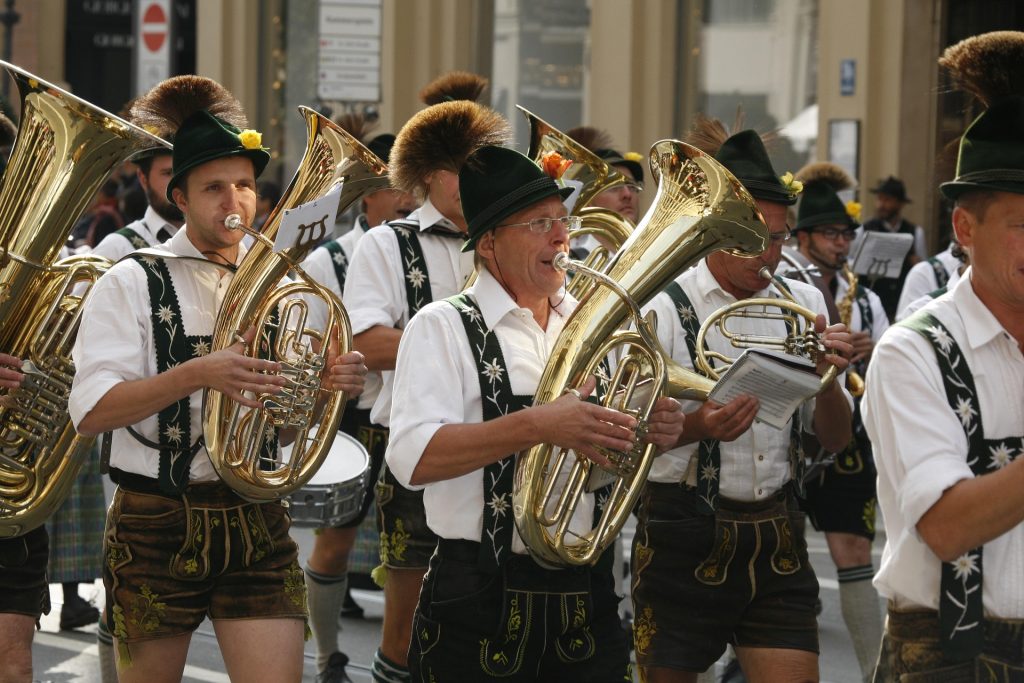
Another favorite activity for many visitors is renting a traditional Bavarian outfit. In fact, you’ll notice that all staff members, as well as a significant number of visitors, choose to wear local costumes, giving Oktoberfest a bit of a medieval fair kind of vibe. For women, the outfit is called a dirndl, while men wear the lederhosen. If you want to buy an outfit, be prepared to spend at least €100 for a complete costume, though prices can easily double that sum. Alternatively, for something a bit more affordable and temporary, you can rent one for the day, with prices ranging from €45,00 to €55,00. There are many shops in central Munich selling or renting costumes, although you can easily find this service online.
Finally, other popular activities at Oktoberfest include climbing to the top of the Lady Bavaria Statue and catching a mini-performance at Wirtshaus im Schichtl, a small 150-year-old tent that doubles-down as a theater. Though exhibitions may be hard to follow if you don’t speak German, this place is known for its dark humor and for its traditional magic trick in which 25 people are “decapitated” every day.
Tips for visiting and enjoying Oktoberfest

- Admission to Oktoberfest is free! Don’t fall for scammers trying to sell you tickets or convince you to pay exorbitant booking fees. The only exception is Oide Wiesn, as explained above;
- Although this is an open-air festival and the grounds are always open, rides, tents and restaurants have opening and closing times. Typically, venues operate daily from 10h00 to 23h30. Some places extend their working hours for 60 minutes on weekends and Friday nights;
- If you can, avoid visiting Oktoberfest on weekends. Especially on Saturdays, the crowds can be truly overwhelming, with huge lines for food, drinks and rides. In fact, just walking through the grounds can sometimes feel too busy;
- If you’re going to Oktoberfest with children, Tuesdays are usually promoted as Family Days, with special discounts on food and attractions;
- Conversely to what usually happens in Germany, it’s best to bring cash for all payments;
- Stay hydrated. More often than not, a visit to Oktoberfest involves lots and lots of drinking. If that’s what you’re getting into, make sure to drink plenty of water, avoid going on an empty stomach and keep an eye out for your belongings;
- Want to visit Oktoberfest but your budget has already taken a hit with flights and accommodation? Then we suggest eating and drinking outside the grounds – where prices are much lower – and then coming to the festival to enjoy the atmosphere. It may not be exactly the same, but it’s still a somewhat budget-savvy way of enjoying the festibal.
- Even if you’re traveling to Munich specifically for Oktoberfest, keep in mind that 1 or 2 days are more than enough to experience the event. Yes, it’s a unique and incredibly fun festival, but gets stale quite fast. Don’t forget to explore the city and even go on a couple of popular day trips to nearby towns and castles.
What to see and do in Munich beyond Oktoberfest

Needless to say, if you’re coming for Oktoberfest you should also take the opportunity to visit Munich! The Bavarian capital is arguably the most popular tourist destination in Germany, as well as one of the places where traditional German culture is best preserved. However, Bavarian traditions extend far beyond Oktoberfest, since the State greatly benefits from having largely escaped the horrors and destruction of World War II, with many of its ancient villages and classical architecture surviving to this day.
In the case of Munich, this rich heritage can be found in its historic center, royal palaces and stunning urban parks, the latter of which rank among the very best in Europe. While this is undoubtedly an expensive city, it is also a place with plenty to see and do, countless restaurants and beer halls worth trying, and a fun, vibrant atmosphere that is not always immediately associated with Germany.
Among the most popular tourist spots, you absolutely cannot miss Altstadt, the Old Town of Munich. Home to sites such as Marienplatz and the Munich Residenz, as well as to a number of historic churches, this is the prettiest, most tourist-oriented district of the city. Outside the Old Town, you shouldn’t miss the Englischer Garten, Nymphenburg Palace, the Kunstareal District or the Olympiapark. For football fans and car aficionados, it’s worth setting aside enough time to visit Allianz Arena and BMW Welt, respectively. Luckily, we have crafted a detailed Munich travel guide, where you can find everything to see and do in the city, as well as key information on safety, hotels, public transport and much more!
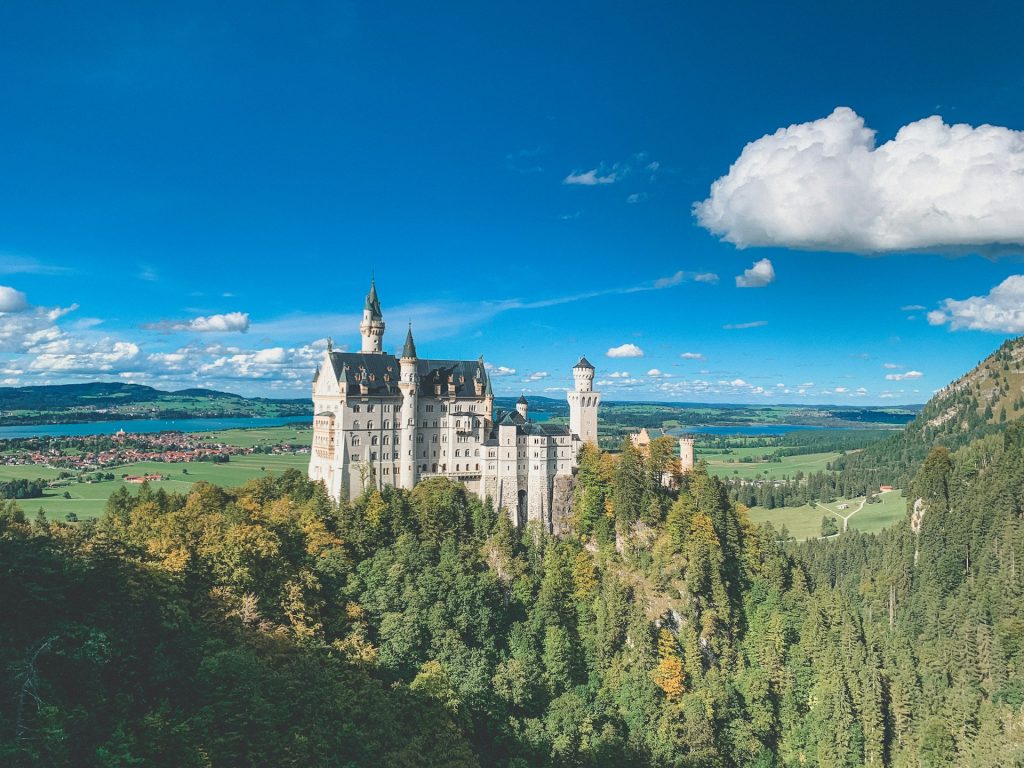
If you have even more time in hands, we recommend leaving Munich to explore other renowned attractions in the Free State of Bavaria, including Neuschwanstein Castle, the cities of Nuremberg, Regensburg and Wurzburg, the historic towns of Bamberg and Rothenburg ob der Tauber, or the Dachau Concentration Camp.
Traveling soon? Get your Holafly eSIM with a 5% discount for seamless internet access in any destination. No more worrying about roaming charges or finding local SIM cards. Enjoy unlimited data and stay connected with ease. Order your Holafly eSIM now »
Heymondo offers a wide range of travel assistance insurance policies with a 5% discount. They combine the best quality, service and price with various levels of coverage, so you’re covered on your weekend getaways and long trips. Buy insurance »
Copyrighted 2026 by kamaviNET sp. z o.o. Please be aware that this article and whole website is copyrighted. No part of this publication may be reproduced, distributed, or transmitted in any form or by any means without the prior written permission of the publisher.