Chile Travel Guide – transportation, hotels, tips + 2-week itinerary

A complete Chile travel guide with all the information you need regarding hotels, restaurants, transportation, safety and the best travel tips for those visiting the country. We’ve also included a 2-week itinerary with everything you should see and do in Chile in 15 days, including the likes of Atacama, Patagonia and the Easter Island.
Stretching for an unbelievable 4300 km between the waters of the Pacific and the impenetrable Andes, Chile is one of the most unique countries in the world. Conditions are extremely diverse throughout its territory due to its geographical oddities, with the inhospitable, almost Martian landscapes of the Atacama Desert to the north, and the stunning lakes, snowy peaks and glaciers of Patagonia to the south. As you might have easily assumed already, Chile is a top destination for lovers of nature tourism and the outdoors!
However, the country also has a rich cultural side, which can be found in the eclectic blend of modern and colonial architecture in the capital of Santiago – also known for having some of the best museums in South America – or in the decaying beauty and abundant street art of the famous port city Valparaiso. Moreover, it’s impossible to skip the legendary Easter Island and its Moai statues, which despite lying more than 3500 km off the Chilean coast, still stand out as one of the most recognizable destinations in the country. As you can see, Chile can be quite the versatile destination!
So, if you’re planning a trip to this stunning destination, our ultimate Chile travel guide is here to help. In addition to practical information about hotels, restaurants, transportation and local experiences, we’ve also put together a 2-week itinerary, including all the places you must see and visit in Chile in 15 days.
Chile Travel Guide

How to get to Chile – Flights from Ireland
As the country’s capital and biggest city, it’s no surprise most international visitors arrive in Chile through its busiest air hub: the Arturo Merino Benítez International Airport, located in the capital Santiago de Chile.
Unfortunately, there are no direct flights between Ireland and Chile, so the only way to fly into the country is by having a layover in one of several South and/or North American cities. Air Canada, United and Delta usually have the best deals for flights departing from Dublin, starting from €650,00 (return), with layovers in Toronto and the US, respectively.
How many days do I need to visit Chile?

As we’ve made sure to highlight in the intro, Chile is absolutely huge! To make matters worse, the country’s most popular tourist destinations are quite spread out, meaning you’ll need to cover thousands upon thousands of kilometers just to see it all. Evidently, this ends up seriously affecting your pace and itinerary, as you’ll inevitably need to waste some of your time getting from one place to the next (even if you fly).
That being said, if you want to get to know the country properly, we strongly recommend setting aside enough time and money for a two-week vacation in Chile. Even so, the country is just so big you’ll still need to make significant concessions here and there – such as skipping Easter Island, for example. Be that as it may, this timespan will give you just enough time to see the mainland highlights, from the mesmerizing Atacama Desert to the world-famous Patagonia, with the likes of Santiago, Valparaiso and the Los Lagos District in between.
Chile Travel Guide – Best time to visit the country

Given the diversity of landscapes in Chile, figuring out the best time to visit the country is a slightly more complicated challenge than usual, since the conditions in the desert will naturally differ from those in the semi-Antarctic setting of Patagonia (and everything you’ll find in between).
Even so, it’s more or less agreed that the best time to visit Chile is during the Southern Hemisphere’s Summer months, namely from November to February. During this period, conditions in Patagonia won’t be as cold or windy, and all hiking trails will be open and cleared. At the same time, the Atacama Desert – where temperatures are far more stable throughout the year – will also offer great conditions for visitors, with starry skies and more comfortable temperatures than usual at night. As for the rest of the country, and while it might not be the ideal time to visit certain regions, at the very least you can still enjoy the beach along the coast in Valparaíso and soak up the lively summer vibes in Santiago.
On the other hand, the Chilean summer is also the peak tourist season, which means busier crowds and higher prices. Guess you can’t have it all!
Chile Travel Guide – Documents needed for your trip
In order to enter Chile, British and Irish travelers you will need to show their passport. The document should be valid for a minimum period of 6 months from the date of departure from the country.
Fortunately, Chile has a very relaxed visa scheme, so visitors hailing from those countries may remain in Chile for a consecutive period of up to 90 days with no visa required.
Chile Travel Guide – Internet and SIM Cards
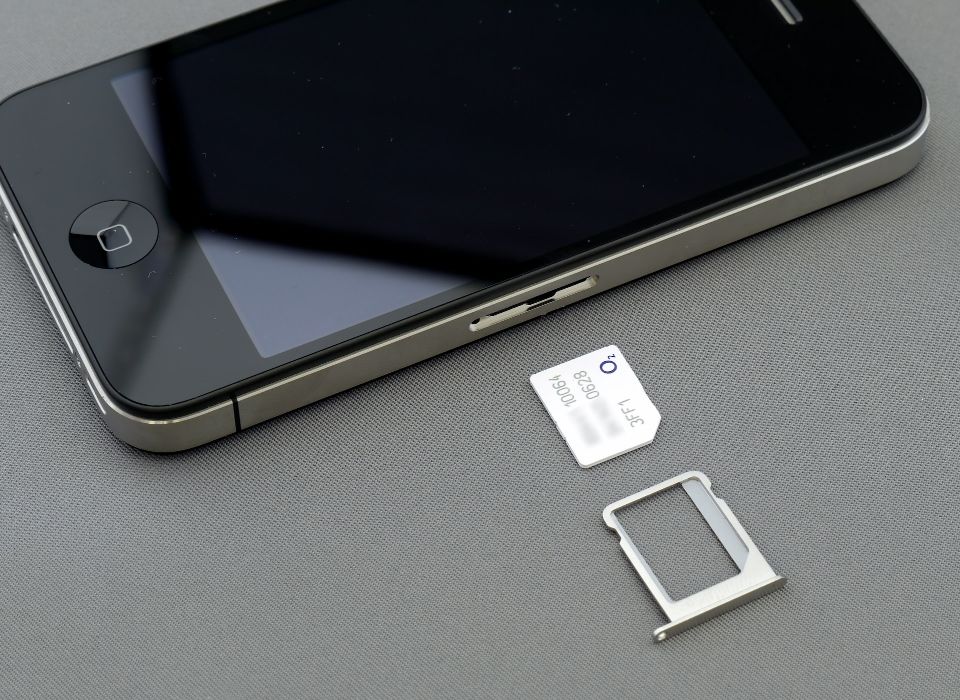
Since there is no special agreement in place between Ireland and Chile regarding international communications and roaming fees, using your regular phone plan is a big no-no!
Therefore, our recommendation is that you get a SIM Card when traveling to Chile. You can either do it upon arrival at the airport, or by visiting an official store in the city. However, keep in mind airport prices may be slightly more expensive and data packages aren’t probably as diverse. Currently, there are 4 big companies that pretty much run the mobile data market: Entel, Movistar, Claro and WOM.
Another thing to keep in mind is that all companies sell basic SIM cards that you need to top-up (“recarga”) before buying data packages (called “bolsas”) that suit your needs. These SIM cards only include 1GB of data and cost between $2000 to $4000. Movistar currently stands as the only exception, as the company offers a pre-paid tourist SIM card with mobile data and local calls. As for their competition, and though the whole top-up and data package purchasing may sound a bit complicated at first, just ask a store clerk for help and they’ll gladly assist you.
Entel SIM Card
- Unlimited Data for 7 days: $5690
- 10 GB for 30 days: $5000
Claro SIM Card
- Unlimited Data for 7 days: $3000
- 50 GB for 30 days: $7000
- 25 GB for 30 days: $4990
WOM SIM Card
- Unlimited Data for 15 days: $7990
- 10 GB for 30 days: $5000
- 24 GB for 30 days: $8000
Movistar SIM Card
- Plan para Todos
- Data: 40 GB
- Social Media Apps: Unlimited
- Local Calls: 500 minutes
- Validity: 30 days
- Price: $4990
Chile Travel Guide – Withdrawals, banking fees and travel budget

With the Chilean Peso (CLP – $) as the country’s official currency, any withdrawal using an Irish bank card might incur in the payment of several different fees. Besides the percentual fee referring to the currency conversion, some Irish banks may also charge a flat commission for withdrawals made outside Ireland. In some instances, you may well end up paying 5%-6% of your original withdrawal in banking fees.
On the other hand, exchanging money before your trip is not a viable solution either. Besides not being any cheaper, it’s also not safe or wise to carry so much money on you during your trip. As such, we recommend using the services of online banking fintech companies such as Revolut, N26 or Monzo.
Although each have their own limitations and fees, they allow you to withdraw a certain amount in foreign currency without any fees involved. And even after that threshold is reached, costs are much smaller when compared to traditional banks. Keep in mind, though, this does not apply to fees issued by local banks for withdrawals made with foreign cards. In Chile, those fees can range from $4000 to $7000, depending on the local ATM operator. Be that as it may, a message will always pop up every time there is a fee per withdrawal, so you will never be caught unaware.
Regarding payments, and especially in bigger cities and popular tourist destinations, Chile is a surprisingly digital society. Even smaller and informal joints and shops take card, such as hole in the wall restaurants and street vendors. On the other hand, it’s quite common for local establishments to add a card fee (about 3%) to cover for their own expenses with the transaction, should you choose to pay by card. At the time of writing, only Banco Internacional doesn’t charge any fees for withdrawals using a foreign card. If you prefer to take cash and exchange your money in Chile, here are 5 exchange offices we can recommend in Santiago, San Pedro de Atacama, Puerto Natales and Puerto Varas:
- Casa de Cambios Frontera – Santiago
- Inmonex – Santiago
- Travel latina life – San Pedro de Atacama
- Natales Money Exchange – Puerto Natales
- Afex – Puerto Varas
Chile Travel Guide – Safety and travel scams

Similarly to what happens all over South America, crime rates in Chile are quite high compared to what we may be used to in Europe. Up until the 2019 Estallido Social protests, which were followed by Covid and the consequent spike in inflation rates, Chile was considered the safest country in all of Latin America, alongside Uruguay. However, living conditions have taken a serious hit since then and crime rates have gone up – especially in Santiago and Valparaiso. However, most violent crimes are focused on specific no-go zones and tied to cartels and activities like drug trafficking, meaning tourists are unlikely to be affected. Furthermore, numbers are much lower in tourist areas, where the local economy is highly reliant on tourism. That means you’ll be able to enjoy places like Patagonia, Los Lagos or Atacama with the same peace of mind as you would in Europe.
Evidently, and even when strolling through areas that are deemed as safe, it is advised to keep your guard up to avoid becoming a target of theft. Just stick to common-sense – don’t carry large amounts of cash, use indoor ATMs and avoid flashing valuables. Leave jewelry and other expensive items in your hotel safe, only use your phone and camera in tourist areas and avoid deserted, poorly illuminated streets. If you find yourself the victim of a crime, don’t play the hero, as it’s always better to let go of material possessions instead of risking escalation. Trust your instincts: if something feels off, don’t do it! As for transportation, be especially careful when riding the bus. Keep an eye out for your belongings and always carry your bag and valuables on your lap, as experienced petty criminals are known to snatch all kinds of items from below seats and overhead compartments. Unfortunately, I’m speaking from experience, as I’ve had a backpack mysteriously stolen from me while on a bus in Chile.
Finally, only use taxis with running meters (if you rely on Uber, even better) and never exchange money with strangers who approach you on the street. On a brighter note, tap water is generally safe to drink. Additionally, since Chile is located in an area with high seismic activity, adhere to authorities’ instructions in the event of a natural disaster – after all, they’re the experts!
Where to sleep in Chile – Hotels and Accommodation

If you’re looking out for a place to stay on our Chile travel guide, then we got you covered!
Spoiler alert: Chile is a shockingly expensive destination! When you factor in transportation, tours, hotels, restaurants and supermarkets, you’ll realize it’s quite easy to spend a lot of money. If you’re willing to spend some time looking for local restaurants, sleep in guesthouses, avoid tours and move around using buses, then you may feel like your money goes a longer way in Chile… just don’t expect a cheap, South American destination! However, if you always go for the quickest, flashiest, most practical option, then get ready to spend as much as you would in Europe. Within South America, Guatemala is definitely more expensive than the likes of Brazil, Argentina, Peru or Colombia.
That being said, here are some options based on the cities we recommend you to stay at:
Chile travel guide – Hotels in Santiago
- € – Chilhotel en Providencia
- €€ – Hotel Regal Pacific Santiago
- €€€ – AC Hotel by Marriott Santiago Cenco Costanera
- €€€€ – Hotel Magnolia Santiago
Chile travel guide – Hotels in San Pedro de Atacama
- € – Yakana Hotel
- €€ – Nueva Lodge La Estación San Pedro de Atacama
- €€€ – Hotel La Cochera
- €€€€ – Lodge Quelana
Chile travel guide – Hotels in Puerto Natales
- € – El Patagónico Hostel
- €€ – Hotel Casa Verde
- €€€ – Hotel Altiplanico Puerto Natales
- €€€€ – The Singular Patagonia Hotel
Chile travel guide – Hotels in Puerto Varas
- € – MaPatagonia Hostel Casa Historica
- €€ – Casa Kalfu Hotel Boutique
- €€€ – Solace Hotel Puerto Varas
- €€€€ – Radisson Hotel Puerto Varas
Chile travel guide – Hotels in Pucón
- € – Santa Maria Pucon
- €€ – Hotel Pucon Green Park
- €€€ – Rakau Lodge
- €€€€ – Park Lake Luxury Hotel
Transportation between airports and cities in Chile

From Arturo Merino Benítez International Airport to Santiago city center
Located about 16 km away from Centro Historico, the best way to travel between Arturo Merino Benítez Airport and the center of Santiago de Chile is by relying on Turbus and Centropuerto buses. All you need to do is follow the signs upon landing to find the place of departure. These buses leave every 10 to 15 minutes, operating from 05h30 to midnight. Both companies stop at the same bus terminals in the city, so you can generally choose whether you want to get out at Pajaritos or Sur/Alameda. If you prefer Centropuerto, you can buy your ticket online (through the link above) or directly at the booths inside the airport. Fares currently stand at $2200 one-way or $3500 roundtrip. As for Turbus, tickets cost $2000 and are not available online. Keep in mind bus terminals in Santiago are still a bit far away from the downtown area, although you can quickly catch the metro to your final destination.
On the other hand, if you don’t want to waste no time with logistics, just grab your phone and order an Uber. Expect to pay around $20.000 for a journey to the city center. However, it’s good to know that Uber is not allowed to operate in front of the arrivals’ terminal, so you’ll need to board the car at one of the parking lots. Regardless, the driver will instruct you where to go via chat. Just be ready to be aggressively approached by unpleasant taxi drivers on your way to the parking lot!
From Calama Airport (El Loa) to San Pedro de Atacama

Should you visit the famous Atacama Desert, know that the nearest airport is located in Calama (El Loa Airport), about 100 km away from San Pedro de Atacama. While there’s no direct public transportation between the airport and the desert’s main town, all you need to do is hail a taxi to Calama Bus Terminal (5 km) and board a bus to San Pedro. Although there are several companies running the route, the most popular ones are Frontera del Norte and Atacama 2000. Although neither of the companies have their own online booking system, you can buy tickets and check out schedules at websites like Recorrido.cl or Kupos.cl. The journey takes between 1h20 and 2h00 and tickets cost $5000 one-way. Typically, companies will operate this route from 06h30 to 20h00.
Alternatively, if you land in Calama late at night, you may simply hire a transfer service to take you directly to San Pedro de Atacama. Companies such as Transfer Pampa or SanPedroAtacama.com organize transfers for $15.000-$20.000 per person. If you want to play it safe and go for an internationally recognized (and certified) service, you can book your transfer through Viator.
From Punta Arenas Airport to Puerto Natales
Considered the main air hub in Chilean Patagonia, the Punta Arenas Airport (Presidente Carlos Ibáñez International Airport) is located around 250 km from Puerto Natales – the best base for those wishing to explore the Torres del Paine National Park. While it’s true you can also fly directly to Puerto Natales Airport, flights are seasonal and much more limited. Still, if you manage to find decent flights to Puerto Natales, we recommend booking them as it will save you time and make your life a lot easier!
Regardless, and for the overwhelming majority of passengers who land in Punta Arenas, your best bet is to board a vehicle from Bus-Sur, the company that runs buses from this airport to Puerto Natales. You can buy your ticket online for just $8000. The journey takes 3h15.
From Puerto Montt Airport to Puerto Varas

Finally, we share the best way to get from El Tepual International Airport, in Puerto Montt, to the lake town of Puerto Varas, just 20 km away. While you could equally set up base in Puerto Montt, we believe the other option to make it easier to explore the region of Los Lagos. Plus, Puerto Varas is just prettier and overall nicer.
The best way to make this journey is to rely on a transfer service. Since the route is very popular, there are lots of companies in the area selling tickets for $10.000-$15.000, like Denomades or AtoB Transfer. The journey takes 30 minutes. As for the cheapest option, you can hop on a van from Transportes Império to Puerto Montt Bus Terminal ($3000). Once there, there are loads of local companies doing the trip to Puerto Varas for a meager $900. These vans/buses leave all the time, so just ask around the terminal which lane the next vehicle to Puerto Varas is departing from.
Chile Travel Guide – Transportation and how to move around in the country
Unfortunately, railway services in Chile are restricted to just a few towns/cities in the middle of the country, so using the train is not really an option for travelers. As a result, your only alternatives to cover the gigantic distances between destinations in Chile is to take a domestic flight or endure excruciatingly long bus journeys. For shorter distances, and though it can’t really be applied to our itinerary, Chileans often take a “colectivo” – the local name given to shared taxis with pre-defined routes.
As such, and for those heading to Chile soon, here’s a little overview of how you can move around in the country!
Buses in Chile
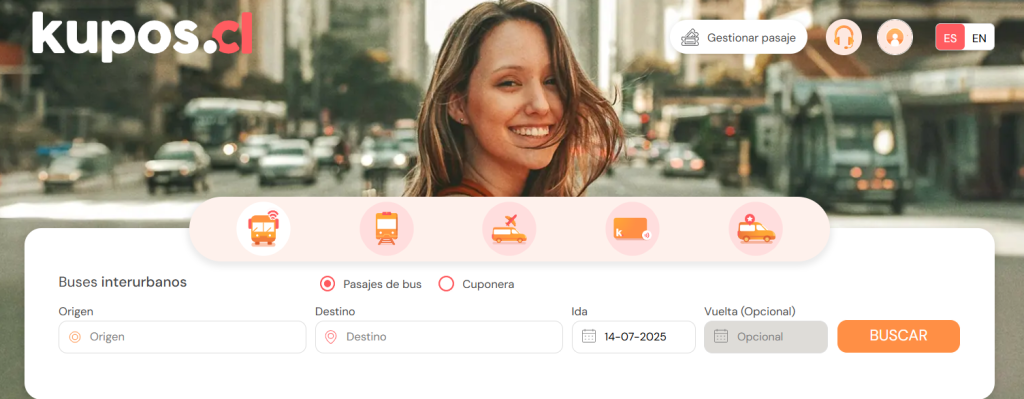
Considered the most popular way of traveling around in Chile, taking a bus is inevitable – even if you prefer to take domestic flights for longer routes. Since there is not an extensive, modern railway system, thousands of Chileans rely daily on the nation’s countless bus companies to get from point A to point B. On the bright side, this has resulted in a fairly decent network of roads, as well as a fleet of buses that are more modern and comfortable than those you might be used to in Europe, especially for long-distance travel.
Among the many bus companies operating in Chile, Turbus and Pullman stand out as the largest in the sector, boasting nationwide coverage. However, even if neither of these carriers serves a specific route you’re looking for, you can always search for connections using aggregators like Recorrido.cl or Kupos.cl, which include smaller regional operators. While all seats on shorter trips are standard, for longer journeys you can opt for salón cama seats. Though significantly more expensive, these bigger, more comfortable, fully reclinable seats are located inside their own private compartment, separate from the rest of the cabin. While these premium seats don’t come cheap, the extra comfort makes a huge difference when you need to sit on a bus for 15+ hours.
Lastly, here are a few of the most useful and popular bus routes for tourists in Chile:
- Santiago – Valparaiso: 2h00; $4000
- Santiago – Calama (to San Pedro de Atacama): 22h00; $44.000
- Calama – San Pedro de Atacama: 1h30; $5000
- Santiago – Pucón: 11h00; $20.000
- Santiago – Puerto Varas: 13h00; $20.000
- Pucón – Puerto Varas: 5h00; $16.000
- Puerto Montt – Puerto Varas: 00h30; $900
- Punta Arenas – Puerto Natales: 3h15; $8000
Internal flights in Chile

As you can see, and given how long many of these overland trips take, it’s easy to understand why so many travel itineraries in Chile include several different domestic flights. While you can still get to wherever you need to be by bus (though the Patagonian case is notoriously complicated), the time you’ll have to waste on the road can take up quite a big chunk of your 1 or 2-week vacation. Therefore, making the most of your time is essential! Fortunately, the country is served by several domestic airports, and airlines like LATAM, Sky Airline and JetSmart help connect most destinations across the Chilean territory!
As distances are pretty manageable in the center of the country – especially along the Santiago-Valparaíso-Pucón-Puerto Varas axis – flying is particularly useful for those wishing to see the Atacama Desert (in the far north) and Patagonia (in the far south). Not only will visitors save up some precious time that would have otherwise been spent on the road, but flight fares are also pretty affordable. In fact, sometimes passengers end up paying the same (or even less) for a flight than they would for a bus ticket.
Once again, here are the details for the most popular flight routes for tourists in Chile:
- Santiago – Calama (to San Pedro de Atacama): 2h00; from €19,00
- Santiago – Puerto Montt: 1h45; from €23,00
- Santiago – Puerto Natales: 3h15; from €53,00
- Santiago – Punta Arenas: 3h30; from €47,00
- Punta Arenas – Puerto Montt: 2h15; from €41,00
- Puerto Natales – Puerto Montt: 1h55; from €35,00
Chile Travel Guide – Local food and traditional dishes

Given Chile’s vast territory and diverse native peoples, combined with the inescapable colonial influences, the country has a rather unique culinary culture. That’s not to say that you won’t find dishes and ingredients common to some neighboring South American countries, but Chilean cuisine is actually quite different from the rest of the continent. That said, if we had to name one dish that stands out as the national dish of Chile, it would have to be Cazuela, a hearty meat stew (beef, chicken or lamb) with pumpkin, potatoes and corn, perfect to help you cozy up on colder nights. Alternatively, some might point to Pastel de Choclo as the nation’s staple dish, as this corn casserole stuffed with ground meat is found on nearly every menu in traditional restaurants.
Regardless, there’s no shortage of distinctive specialties hailing from this Andean nation, such as Chorrillana, a platter (to share) of fries topped with caramelized onions, steak strips and sunny-side up eggs; Caldillo de Congrio, a conger eel stew; Robalo Chileno (seabass), one of Chile’s most popular fish species; or Pollo Arvejado, chicken stewed in a sauce made with white wine and paprika. Additionally, in areas where the native culture is still present, particularly represented by the Mapuche, the most famous dishes include Curanto, a giant stew where ingredients are cooked in a pit over hot stones; and Chochoca, a flatbread made from potatoes and flour, which may then be combined with either sweet or savory ingredients. Meanwhile, in Patagonia, where Saxon influence is stronger and there’s less variety of fruits and vegetables, the cuisine is heavier and more meat-based. Local specialties include Arrollado de Huaso, a pork roll with bacon, Cordero al Palo, spit-roasted lamb; and Pernil de Cerdo, roast pork leg.
On the other hand, if you’re always on the move and just need to find a quick bite, there’s no shortage of street food options either. Try Humitas, the Chilean version of tamales; Empanadas de Pino, filled with ground beef, onions, hard-boiled egg and olives; Sopaipillas, fried pumpkin dough pastries often served with butter, tomato or another salsa; and the famous Completo, the Chilean-style hot dog topped with smashed avocado. When it comes to sweets and desserts, don’t miss out on Alfajores, a variation of the Argentinian specialty consisting of cornstarch cookies filled with dulce de leche; Torta Tres Leches, a moist cake made with evaporated milk, condensed milk and whole milk (hence the name); Kuchen, a specific type of cake and fruit tart introduced by German immigrants; and Manjar Blanco, a cream made with milk and sugar mixed with vanilla, lemon juice or cinnamon, which can be had by the spoonful or used to fill cookies and pastries.
How to visit Easter Island, Chile – flights, travel requirements and prices
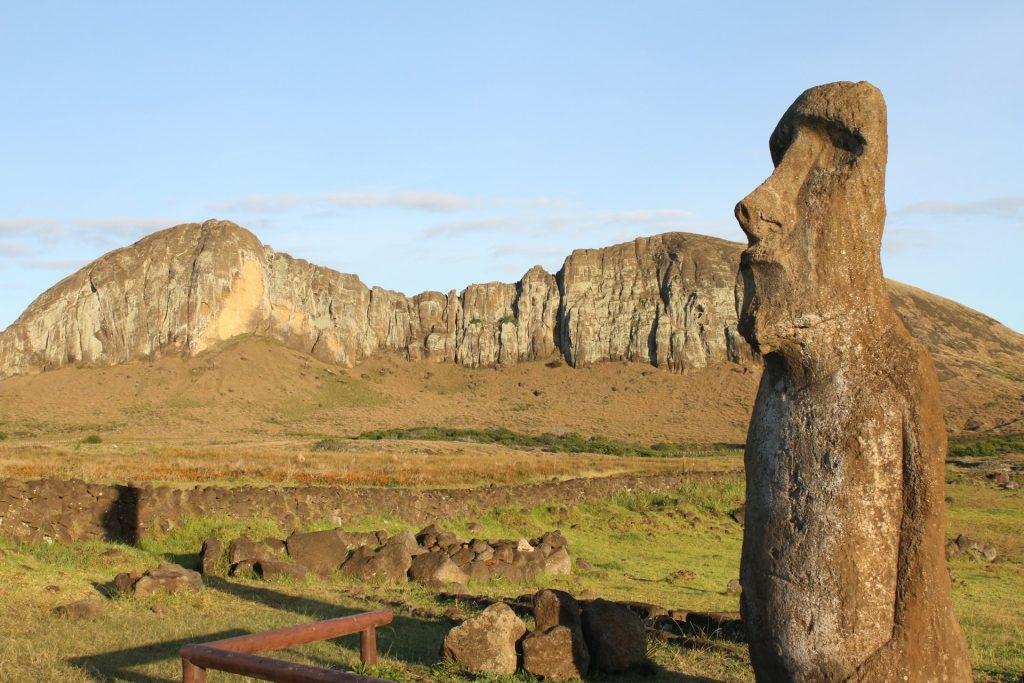
Although we didn’t have time to include Easter Island in our itinerary, there’s no denying how alluring this remote Pacific Island has become for many travelers. Thanks to the Moai statues, the famous giant stone heads carved by the native Rapa Nui people, Easter Island is probably one of the most romanticized destinations in all of the Americas. Unfortunately, part of that mysticism comes from its extreme isolation, as the small Polynesian island lies more than a 5-hour flight away from Santiago de Chile. While prices can go up and down, round-trip airfare for this route – operated exclusively by LATAM – starts at around €266.
Due to the destination’s fragile ecosystem, traveling to Easter Island requires you to show a hotel booking confirmation, as well as proof of a return flight to Santiago. Moreover, it is mandatory to complete the official entry form within 48 hours before your flight. In addition, recent regulations have made it a requirement to hire a private guide (or tour) to visit Rapa Nui National Park, where nearly all of the archaeological sites, petroglyphs and Moai statues worth seeing are located. You can find guides in several different platforms, but the national park’s official website has a dedicated page listing certified guides. For your guide, expect to pay between $50.000 and $75.000 per person per day, in addition to the $76.000 entrance ticket to the park, which is valid for 10 days.
Truth be told, this is one of the major challenges of visiting Easter Island. Beyond the cost of flights, the admission ticket to the park and having to hire a guide, you’ll also need to factor in inflated hotel and restaurant prices, as well as a car rental, since there is no public transport on the island or within the national park. You can always use taxis, but you’d have to pay extra for the driver to tag along for the entire day. A slightly cheaper option might be to hire a certified guide who also has a vehicle and can drive you around the island. In that case, while the guide’s fee may be higher, it could balance out the cost of renting a car. All things considered, adding a 3-night stay on Easter Island to your Chile itinerary can easily end up costing over an extra €1000 per person.
Chile 15-Day Itinerary – Highlights of Two Weeks in Chile

Unsurprisingly, given the abysmal distances and just how spread out the top tourist destinations in Chile really are, we definitely recommend spending at least 2 weeks exploring the country. Not only will you have a lot of cool places to see and visit, but you’ll also need to deal with a lot of time wasted on traveling from one place to the next, whether by bus or plane.
That being said, and though it may not still allow you to explore everything the country has to offer, with 15 days you’ll be able to at least enjoy the very best of Chile, with the honorable exception of the Easter Island. Besides the customary stop in Santiago de Chile and the mandatory day trip to gritty-yet-beautiful Valparaiso, with 2 full weeks you can appreciate the alien-like landscapes of the Atacama Desert, before heading down south and exploring legendary Patagonia, one of the world’s best nature tourism destinations. Finally, we recommend spending the rest of your time in the beautiful district of Los Lagos and the province of Araucanía, two areas of indomitable volcanos, adrenaline activities and jaw-dropping thermal baths.
So, without further ado, here are the cities, places and tourist attractions you should visit in a 2-week itinerary through Chile:
Chile 15-Day Itinerary: Day 1 – Santiago de Chile: Centro Historico, Barrio Brasil and Lastarria

As the main air gateway for visitors to the country, your adventure is likely to kick off in Santiago, the capital of Chile. As the largest and most populous city in the country, Santiago has a lot to see and do, with an eclectic mix of modern and colonial architecture, trendy neighborhoods, street art and some of the most interesting museums in South America. Unfortunately, the city has been struggling with economic issues and consequent protests and demonstrations. As a result, crime rates are on the rise and the historic center shows clear signs of neglect and disinvestment. Still, there is no way one can skip the capital, so we recommend spending at least two days in Santiago. That said, and to better understand the country’s mind frame, your first stop should be the Museum of Memory and Human Rights, a free-to-visit institution dedicated to preserving the memory of the victims of Augusto Pinochet’s regime. Dictator for 17 long years, following a US-backed coup against the popular Salvador Allende, Pinochet committed horrific crimes against his own people, persecuting political opponents, enforcing the ultra-liberal doctrine of the Chicago Boys and leaving a legacy that still affects Chile to this day politically, constitutionally and economically. This museum’s goal is to raise awareness towards Pinochet’s actions, tell the story of his rise to power and ensure the crimes of the regime are never forgotten, especially now as his political heirs are getting more and more popular.

From there, you’ll make your way to Centro Histórico, the district that boasts most of the city’s old, classical buildings. Along the way, be sure to stop in Barrio Brasil, known for its overwhelming number of street art murals, and in Concha y Toro, a picturesque quarter that looks like it belongs in a medieval fairytale. This is, in fact, one of my favorite features of Santiago, as the city hides these little neighborhoods and clusters of streets that are completely different from the surrounding architecture, making you feel like you’ve just been magically transported to a whole different place. Other remarkable examples of these neighborhoods include the picturesque Barrio Paris-Londres, which wouldn’t look out of place in any ancient European city; Paseo Nueva York, home to Santiago Stock Exchange; Barrio Lastarria, with its pedestrian streets and many cafés; and Pasaje Adriana Cousiño, known for its colorful, lovely houses. In any case, after Concha y Toro you’ll move on to the unmissable Plaza de Armas, considered the heart of the historic center. In true South American fashion, this square was once the seat of colonial government, and it still houses popular attractions such as the Metropolitan Cathedral of Santiago, the Palacio de la Real Audiencia de Santiago (home to the National History Museum) and the Central Post Office Building. Nearby, we also recommend visiting the Chilean Museum of Pre-Columbian Art ($12.000), featuring an extremely interesting exhibit of archaeological and ethnographic artifacts from various native civilizations that lived in the region before the arrival of colonizers.

Still within the Centro Histórico, a visit to the iconic Palacio de la Moneda, the official seat of the President of Chile, is a must. However, beyond the building’s imposing look and institutional function, the site is mostly famous for the 1973 military coup that brought Pinochet to power. On that day, with logistical and military support from the CIA, the armed forces loyal to the future dictator took to the streets and bombed the palace, leading to the suicide of then-president Salvador Allende, who refused to be captured. To visit the interiors, you must request a free guided tour via the official government website. If you prefer to do a switcheroo and visit this place in the morning, you may also catch the Changing of the Guard ceremony, which takes place every other day at 10h00 (or 11h00 on weekends). After walking through the city center and checking out the Municipal Theatre of Santiago, you’ll cap off your day in the aforementioned Barrio Lastarria. In addition to the district’s charming streets, visitors should climb Cerro Santa Lucía to enjoy the sunset. Rising about 70 meters above the surrounding area, the hill features different viewpoints, statues and several ruins of forts and castles, as this is where the city’s foundation was officially declared. Among the hill’s many highlights, the monumental Neptune Fountain is particularly popular.

First day wrap-up:
- Museum of Memory and Human Rights
- Pasaje Adriana Cousiño
- Barrio Brasil
- Concha y Toro
- Plaza de Armas
- Santiago Metropolitan Cathedral
- Palacio de la Real Audiencia de Santiago
- Central Post Office Building
- Chilean Museum of Pre-Columbian Art
- Palacio de la Moneda
- Paris-Londres
- Paseo Nueva York
- Municipal Theater of Santiago
- Cerro Santa Lucia
- Barrio Lastarria
Where to eat in Chile – Best restaurants in Santiago de Chile
- Maestranza Franklin (Chilean traditional)
- Palacio Del Poroto (Chilean traditional)
- Giratorio (Chilean traditional)
- Antigua Fuente (traditional Chilean sandwiches)
- Fuente Alemana (traditional Chilean sandwiches)
- Los Hijos del Inca (Peruvian)
- New Horizon (Indian)
- Thai Aloy Santiago (Thai)
- Yamile (Arabic)
- Emporio Zunino (empanadas)
Chile 15-Day Itinerary: Day 2 – Santiago de Chile: Providencia and Cerro San Cristóbal

After visiting the Centro Histórico and the Brasil and Lastarria “Barrios”, it’s time to explore other districts of the Chilean capital. However, to get a taste of local life (and a hearty breakfast), we recommend starting your day at Mercado Central de Santiago, before making your way to the National Museum of Fine Arts (free admission). Even if you don’t want to go inside, the building that houses the museum is one of the most beautiful in the entire city. Just to the north, across the Mapocho River, you’ll enter the Providencia commune, regarded as the wealthiest district in Santiago and where the Chilean elite resides. Needless to say, it is also the best (meaning safest) area to stay in the capital. In Providencia, you’ll start off by strolling through Barrio Bellavista, the city’s bohemian and artistic quarter full of trendy cafés and restaurants, colorful alleyways and art shops. True to its reputation among intellectuals and counter-culture icons, Bellavista is also where you’ll find La Chascona ($10.000), one of Pablo Neruda’s three historic homes in Chile. The interior has now been turned into a museum honoring the legendary poet’s life and work, although – in my humble opinion – Neruda’s house in Valparaíso, which we included in the next day of the itinerary, is more entertaining.

Next up, you’ll start the long climb up Cerro San Cristóbal, considered one of the city’s main highlights. Located within the enormous Metropolitan Park of Santiago, the hike to the top will take around 60 minutes, although you can save your energy by taking the Teleferico Santiago from Oasis station ($3000 one-way). Either way, at the top you’ll be rewarded with one of the most breathtaking views over the Chilean capital, as there is no better reminder that despite the city’s sprawling size and urban feel, at the end of the day you’re still surrounded by the Andes. Within the park, and still flying under most tourist radars, we recommend stopping by the beautiful and underrated Japanese Garden of Santiago, with another amazing panoramic view of the city. Back down at street level, your final stop of the day will take place the Sky Costanera, the observation deck located at the top of the Gran Torre Santiago. At 300 meters tall, it’s the highest building in South America and the second tallest in all of Latin America! Tickets to the observation deck cost $20.000 and can be purchased online.

Second day wrap-up:
- Mercado Central de Santiago
- National Museum of Fine Arts
- Barrio Bellavista
- La Chascona
- Cerro San Cristóbal
- Japanese Garden of Santiago
- Sky Costanera
Chile 15-Day Itinerary: Day 3 – Day trip to Valparaiso

Although you’ll be spending another night in Santiago de Chile, today you’ll partake in one of the most popular day trips from the capital. Therefore, get ready to hop on a bus and travel for about 2 hours to the inebriating Valparaíso, once one of the grandest port cities in the world, before the construction of the Panama Canal. Interestingly, Valparaíso has this distinctive feel and aura of a city that has seen better days, with beautiful colonial architecture sharing the space with some of the best and most prominent street art you’ll ever see. Spread across more than 40 hills along the Pacific coast – one of its defining features – very few cities manage to combine two contrasting sides so well. It’s a gritty, vibrant and surprisingly beautiful place, the kind that feels like it came straight out of an Isabel Allende novel. Without further ado, your first stop will be Paseo 21 de Mayo, a scenic overlook offering spectacular views of the Port of Valparaíso, one of the city’s most iconic symbols. As you make it to the historic center, you’ll walk through Plaza Sotomayor, where you’ll start your adventure up the most famous hills of “Valpo”: Cerro Alegre, Cerro Concepción and Cerro Bellavista.

Though the day will inevitably involve a fair bit of walking up and down slopes and staircases, the city’s public transport system includes a series of historic and affordable funiculars ($300 per ride) that will help you save some much-needed energy. The most notable are Ascensor Concepción and Ascensor Reina Victoria. Alongside its elevators, huge port and many hills, street art is another of Valparaíso’s most recognizable traits. In fact, the entire city feels like an open-air museum, with nearly every wall and surface covered in graffiti. While some of it may not look great and can even be considered vandalism, many murals are genuine masterpieces that add a unique character to the city. In fact, Valparaíso’s connection to street art started off as a mean of resistance against the regime of Augusto Pinochet. Since people couldn’t openly criticize the dictatorship, artists would paint political messages through clandestine murals, expressing their dissatisfaction directly on the city’s façades and hillsides. Once the country finally returned to democracy, both the local authorities and the public fully embraced street art, encouraging its growth and decriminalizing the practice to this day. You won’t even need to go out of your way to see it, as you’ll pass by literally thousands of murals just walking through the historic center.

Now onto the actual attractions, and upon taking the Ascensor Concepción up the namesake hill, you’ll start by exploring Paseo Atkinson and Paseo Gervasoni, two scenic promenades with fabulous views over the hillside and the sea, with the Church of Santa Cruz standing between them. As you continue climbing towards Cerro Alegre, it’s worth wandering through the narrow streets to admire the street art and old buildings. To reach Cerro Bellavista, the third and final hill of the day, you’ll take the aforementioned Ascensor Reina Victoria. In this hill, the main attraction is La Sebastiana ($10.000), the most famous of Pablo Neruda’s houses. Though we already talked about La Chascona, in Santiago, La Sebastiana is arguably the most interesting of the poet’s homes, showcasing Neruda’s eccentric style and personality in their full glory. Besides, the views from the balconies alone are absolutely jaw-dropping! Once your tour of the house is complete, you’ll begin the long descent back towards the sea, stopping at Playa Los Placeres. While you can go for a swim if the weather is on your side, the beach is mostly known for its stone platforms where sea lions are often seen basking in the sun. A BBC Wildlife-worthy ending to your day, before heading back to Santiago for the night.

Third day wrap-up:
- Valparaiso Street Art (several locations)
- Paseo 21 de Mayo
- Plaza Sottomayor
- Ascensor Concepción
- Paseo Atkinson
- Church of Santa Cruz
- Paseo Gervasoni
- Ascensor Reina Victoria
- La Sebastiana
- Playa Los Placeres
Where to eat in Chile – Best restaurants in Valparaiso
- La Casa Verde (Chilean traditional)
- Restaurant Como En Casa (Chilean traditional)
- Restaurant El Pimentón (Chilean traditional)
- Moneda de Oro (Chilean traditional)
- San Carlos Restaurant (Chilean traditional)
- Restorán Capri (Chilean traditional)
- Nazca Restaurante Peruano (Peruvian)
- Habrakadabra Sabores (Italian)
- Le Pató (empanadas)
- Pizzeria Ecuador (pizza)
Chile 15-Day Itinerary: Day 4 – San Pedro de Atacama

Having visited the main cities in the center of the country, often regarded as Chile’s cultural hubs, it’s now time to explore some of the nation’s iconic natural treasures. That said, and although you can easily reverse the order, we’ll kick things off by heading north towards the otherworldly landscape of the Atacama Desert. To get there, you’ll need to fly from Santiago to the city of Calama, about 100 km away from San Pedro de Atacama, the main base for anyone wanting to explore the desert. As explained in more detail in the transport section covering how to travel between airports and tourist destinations, you can either take a direct transfer from the airport or grab a taxi to downtown Calama followed by a bus to San Pedro. In either case, it’s likely that your entire morning will be wasted on travel logistics, so once you’ve dropped off your bags and had something to eat, we recommend spending the afternoon walking around San Pedro de Atacama.

Although most people treat this town as a mere base, the streets are actually quite picturesque, with some colonial buildings and traditional adobe houses. It’s super touristy, yes, but charming nonetheless. Plus, since the town is packed with travel agencies, you can also spend an hour or two browsing and booking tours for the upcoming days in the desert (if you haven’t already arranged them in advance). That said, the main places to visit in San Pedro de Atacama include the Plaza de San Pedro de Atacama, the Iglesia San Pedro and the Feria Artesanal. In addition, the Meteorite Museum ($6000) is another interesting stop, with an exhibition featuring nearly 80 meteorites that fell in the desert. If you still have time and energy, we also recommended catching the sunset from Piedra del Coyote, a viewpoint that offers the perfect introduction to the indescribable scenery of the Atacama.
Fourth day wrap-up:
- Plaza de San Pedro de Atacama
- Iglesia San Pedro
- Feria Artesanal de San Pedro de Atacama
- Meteorite Museum
- Piedra del Coyote
Where to eat in Chile – Best restaurants in San Pedro de Atacama
- La Picada Del Indio (Chilean traditional)
- Sol Inti Restaurant (Chilean traditional)
- Adobe (Chilean traditional)
- Las Delicias de Carmen (Chilean traditional)
- El Huerto (Chilean traditional)
- Restaurant El Diablillo (Chilean traditional)
- Emporio Andino (empanadas and sandwiches)
- Cocineria Tchiuchi (bbq chicken)
- Pizzería El Charrúa (pizza)
- Estrella Negra (vegan)
Chile 15-Day Itinerary: Day 5 – Atacama Desert: Geysers del Tatio and Lagunas de Baltinache

Now that you’ve settled in, you’ll be spending the next couple of days visiting the many wonders of the Atacama Desert, considered the driest place on Earth! Truth be told, renting a car would offer more freedom and autonomy, but I must admit I have some reservations about recommending it. On one hand, you’ll need a 4×4 to access the sites included in this itinerary, otherwise you seriously risk getting stuck in the sand. To make matters worse, renting a 4WD in Atacama can be very expensive, especially during high season and/or if you don’t book in advance. All things considered, the safest option is to go with organized tours, as you can find plenty of them both online and on the ground. Regardless of what you choose, prepare for your Atacama adventure to leave a dent on your wallet, as the cost of tours can quickly add up (something you’ll also experience later in Patagonia and Los Lagos as well). Additionally, you’ll have to be selective given the overwhelming number of places to visit in the desert, as covering them all in just two days is pretty much impossible.

Now that we’ve covered all of the logistical hurdles, it’s finally time to explore the desert by getting out of bed before sunrise for a tour of the Geysers del Tatio. Located around 90 minutes away from San Pedro de Atacama, at an altitude of over 4000 meters, this is one of the largest geothermal fields in the world, featuring over 80 geysers. You’re going to be cold and sleepy, but the discomfort is more than justified, as the sight of these explosive and bubbling geysers is one of the most unique in the entire Atacama! Besides the tour, which will take up about half a day, there’s also an entry fee of $19.000. In the afternoon, once back in San Pedro, you’ll go on another tour of the Lagunas de Baltinache. Famous for the way their crystal-blue waters stand in stark contrast to the arid, sepia-toned landscape, these seven lagoons boast insane salinity levels, as their waters have an even higher salt concentration than that of the Dead Sea. Visitors are allowed to swim (or rather, float) in one of the lagoons, but be aware that the water temperature is extremely cold and that time is limited to a maximum of 20 minutes for health reasons. Once again, there’s an entry fee of $12.000 that needs to be paid separately.

Fifth day wrap-up:
- Geysers del Tatio
- Lagunas de Baltinache
Chile 15-Day Itinerary: Day 6 – Atacama Desert: South Route, Moon Valley and Stargazing

After a packed opening day in the desert, get ready for a juggernaut of a follow-up to your adventure. Ready? It will all start by 06h00 with a tour that will take you along the South Route of the Atacama Desert, a course that goes through the main attractions south of San Pedro. This area is especially known for its salt flats and lagoons, which pop up like oases in the Martian-like landscape. Most tours will take you to Piedras Rojas, a lagoon with striking red shores and several hiking trails, before heading back and stopping by the Altiplanic Lagoons: Laguna Miscanti and Laguna Miñiques. Depending on the length of the tour, it may also include Laguna Chaxa, a prime spot to watch flamingos in their natural habitat. As per usual, tours generally don’t include entrance tickets, so you should budget $15.000 for Piedras Rojas + the Altiplanic Lagoons, and $14.000 for Laguna Chaxa.

Back in San Pedro, in the afternoon you’ll visit the legendary Moon Valley (Valle de la Luna), arguably the biggest tourist attraction in the entire Atacama Desert. A dramatic landscape of rock formations, barren dunes and fiery colors, this is the place that best captures the desolate beauty of the desert. In fact, the scenery is so unique that NASA has used Moon Valley as a training site to mimic possible Mars missions. Once again, we recommend joining a tour to ensure you hit all of the valley’s highlights. The entrance fee stands at $10.800 and is paid separately. On an important note, if you’re self-driving across the desert and wish to visit the valley independently, you must purchase your ticket at least one day in advance. Tickets can be bought online, and the entrance is through the Information Center.

After exploring Valle de la Luna and watching the sunset from one of its many viewpoints, you’ll head back to San Pedro for dinner and get ready for your final Atacama activity. Thanks to its isolation, altitude and the complete absence of light and sound pollution for kilometers on end, the desert is one of the best places in the world for stargazing. In fact, the Atacama is home to 8 of the 10 highest astronomical observatories on the planet, further cementing its status. Perfectly aware of that particularity, local agencies offer daily stargazing tours, taking visitors to remote corners of the desert where they can enjoy Atacama’s legendary night sky in all its splendor – with or without telescopes! A great ending to an exhausting day, before you take on the long journey to Chile’s other famous natural treasure, located at the opposite end of the country.

Sixth day wrap-up:
- South Route
- Piedras Rojas
- Laguna Miscanti
- Laguna Miniques
- Laguna Chaxa
- Valley of the Moon
- Stargazing
Chile 15-Day Itinerary: Day 7 – Journey to Puerto Natales, Patagonia

After a demanding – yet rewarding – stretch in the Atacama, you’ll now travel to the magnificent region of Patagonia, a mythical destination for all lovers of nature tourism and the outdoors. However, before we dive into the countless charms of the “end of the world”, you’ll need to sort out the long journey from Atacama to Puerto Natales, which lies over 3000 km away by plane (roughly the same distance as between Portugal and Belarus, for instance). There are no direct flights between Calama and Puerto Natales (or Punta Arenas, also in Patagonia), so you’ll always need to make a stopover in Santiago de Chile, which extends the total travel time to around 13 hours, including the layover.

Additionally, flights to Puerto Natales, the closest base to Torres del Paine National Park, are seasonal, meaning you might have no choice but to fly to Punta Arenas, which is about 4 hours away by bus. Therefore, it’s best to set aside a full day for this journey alone. You can check information about flights and transportation between local airports and their respective cities in the relevant section of this guide.
Seventh day wrap-up:
- Flight to Puerto Natales
Where to eat in Chile – Best restaurants in Puerto Natales
- Patagonia’food (Chilean traditional)
- Los Coigues “Jechef” (Chilean traditional)
- La Picada De Carlitos (Chilean traditional)
- La Disqueria Restaurant (Chilean traditional)
- La Cocina Criolla (Chilean traditional)
- El Puesto Restobar (Chilean traditional)
- El Asador Patagónico (barbeque/”Asado”)
- Base Camp (pizza)
- LA GUANACA entre fuegos (varied)
- Café Artimaña (varied)
Chile 15-Day Itinerary: Days 8 & 9 – Patagonia: Torre del Paine National Park

Waking up in Puerto Natales, there’s a reason why we chose this as the best base for your stay in Chilean Patagonia. If you look at the map, you’ll notice that Patagonia is an absolutely massive region covering nearly 2 million square kilometers split between Argentina and Chile. Even if we stick exclusively to the Chilean side, you could easily spend an entire week just hopping from one place to the next, and it will still feel rushed! I guess what we’re trying to say is that if you only have 3 days to explore Patagonia, then there’s really no other option but to stick to the essentials, which is why we recommend visiting the mindboggling Torres del Paine National Park, regarded as one of Patagonia’s ultimate highlights and located close to Puerto Natales. Famous for its lakes, glaciers and towering massifs, this national park is a perfect microcosm of everything that makes Patagonia such a popular destination. Unlike many other places in Chile, visiting Torres del Paine independently is relatively simple thanks to regular Bus-Sur buses connecting Puerto Natales to various locations across the park, namely Laguna Amarga, Pudeto, Camping Pehoé, Administración and Sector Grey. A round-trip ticket costs $22.000 and the journey takes 2 to 3 hours, depending on your destination.

It’s also important to note that admission to Torres del Paine National Park is paid. For visits of up to 3 days, the ticket costs $32.400 for foreigners (or $46.200 if you need more time). Tickets must be purchased online at least one day in advance. Now that we’ve covered the key logistical details, let’s talk about what to actually do with your time in the park. The most popular activity in Torres del Paine is the W Trek, an 80 km trail (4–5 days) that goes through the park’s most iconic landmarks. Since that would require more time, as well as an even larger budget, our suggestion is to hike two individual sections of this circuit in two separate days. Therefore, you can start with the hike to Mirador Las Torres, a demanding 20-km trail that takes around 8 hours to complete, with a 900-meter elevation gain. However, it’s the most famous day-hike in the park for a reason, crossing through the Ascencio Valley and ending with the iconic panorama of the park’s three granite towers (where the name “Torres del Paine” comes from) rising behind the crystal-clear Laguna Torres. The trailhead starts near Hotel Las Torres, and you can get there by getting out of the bus at the Laguna Amarga stop.

On the following day, and even though your legs may already be begging for mercy, you’re gonna push through and complete another section of the W Trek, this time by doing French Valley Trail. This time, you’ll need to catch the bus from Puerto Natales and get out at the Pudeto stop, then transfer to a catamaran for a 30-minute ride across Lake Pehoé to Paine Grande, where the hike begins. The boat ticket can be purchased online and costs $27.000. This 25 km trail is easier than the one from the day before, as the terrain feels more comfortable and the elevation gain isn’t as steep. As you might have guessed from the trail’s name, the route goes along the French Valley, surrounding Lake Skottberg, offering unobstructed views of the Cuernos del Paine and ascending to the Mirador Francés via the Campamento Italiano. To get back, you’ll need to retrace all your steps, including the catamaran trip. This is also the time to bid farewell to Torres del Paine National Park.

Eighth and Ninth day wrap-up:
- Torres del Paine National Park
- Mirador Las Torres Trail
- French Valley Trail
Chile 15-Day Itinerary: Day 10 – Patagonia: Day trip to Perito Moreno Glacier

What you’ll do on your third and final day in Patagonia is up for debate. On one hand, you could make use of your 3-day Torres del Paine ticket and take the opportunity to complete another trail or two, such as the Glacier Grey Trail, the Mirador Cuernos, the Mirador Cóndor or the Lazo-Weber. However, if you’re feeling exhausted by now (which is likely) and in need of a day to rest your weary legs, we suggest joining a tour that crosses the border into the Argentinian side of Patagonia and takes you to see the imposing Perito Moreno Glacier!
Considered one of the largest glaciers in all of Argentina, this striking block of ice is absolutely massive (and still growing). Plus, the area where it’s located – inside Los Glaciares National Park – is supported by an excellent tourism infrastructure that includes several boardwalks allowing you to get astonishingly close to the glacier. In addition to the price of the tour, you’ll also need to pay $45.000 Argentine Pesos to enter the park. If you wish, it’s also possible to take a short boat ride right up close to the glacier, though it’s not included in the main tour. These boat trips can be booked upon arrival, with prices starting at $60.000 Argentine Pesos for a 60 to 90-minute ride.
It’s an expensive and long activity—but a Patagonian classic that should not be missed!

Tenth day wrap-up:
- Perito Moreno Glacier (Argentina)
Chile 15-Day Itinerary: Day 11 – Los Lagos: Puerto Varas

Where does Patagonia start/end exactly? Well, let’s just say its geographical limits aren’t all that clear. While some believe the region only begins in Aysén, others argue that the district of Los Lagos should be included. Labels aside, though, the next few days will be dedicated to exploring Los Lagos, a region of volcanoes, lakes and waterfalls that is also spread across Chile and Argentina. Although the outdoors is the clear highlight, you may also come across glimpses of Chile’s unique southern culture – one that is heavily influenced by both European settlers and the indigenous Mapuche people. To leave Patagonia, you’ll need to fly from either Puerto Natales or Punta Arenas to Puerto Montt, the main city in Los Lagos and home to the largest airport in the area. In any case, today will be spent in Puerto Varas, the lovely town just 20 km away that we recommend using as base. You can check how to get from Puerto Montt Airport to Puerto Varas in the relevant section of this guide.

So, after checking into your hotel, you’ll start by taking a leisurely walk around Puerto Varas. This Chilean region has a strong German influence, the result of mass migration from the country in the 19th century. As such, don’t be surprised if some houses and churches – especially the Iglesia del Sagrado Corazón de Jesús – look like they came straight out of a Hansel and Gretel storybook. Besides the church, you should visit Cerro Philippi, and most importantly, enjoy the iconic view from the shores of Lake Llanquihue. On clear days, visitors can see the silhouette of the Osorno Volcano lying in the distance, making up the view that has become Puerto Varas’s postcard image!

However, the best part of Puerto Varas is its strategic location, making it an ideal base for several day trips. Not wasting any time, you’ll be putting that popularity to the test in the afternoon with a visit to the Saltos de Petrohué, a series of powerful and impressive waterfalls surrounded by trails and boardwalks in the Vicente Pérez Rosales National Park. With the snowcapped Osorno Volcano in the background, it’s one of the most stunning vistas in the entire district of Los Lagos. To get to the waterfalls from Puerto Varas, just take a public bus (stop location here). The journey takes around 90 minutes, and tickets cost $3500. If you still have time after visiting Petrohué, you can either walk 1h30 or take the same bus for an extra $500 to reach Todos los Santos Lake, the last stop of the day. To return to Puerto Varas, just catch the bus going in the opposite direction, back to the city.

Eleventh day wrap-up:
- Puerto Varas
- Iglesia del Sagrado Corazón de Jesús
- Cerro Philippi
- Lake Llanquihue
- Saltos de Petrohué
- Todos los Santos Lake
Where to eat in Chile – Best restaurants in Puerto Varas
- El Rincon Chaitenino (Chilean traditional)
- Bravo Cabrera (Chilean traditional)
- Carne y Papa de Schofield SPA (Chilean traditional)
- Pan Con Chancho (traditional Chilean sandwiches)
- Santo Fuego (barbeque/”Asado”)
- Terramatta Cucina y Rosticcería Italiana (Italian)
- La Puerta Roja (Spanish)
- Pizzapoli (pizza)
- Puerto Dulce Konditorei (German bakery)
- Cassis Café (varied)
Chile 15-Day Itinerary: Day 12 – Los Lagos: Chiloé Island

Still in Los Lagos, it is now time for another day trip from Puerto Varas – this time to Chiloé Island! Whether you want to focus on its culture, architecture, ecosystem or weather, this island is completely different from the rest of the surrounding region. With its lush green pastures, historic churches and a strong presence of Mapuche traditions, Chiloé feels like a world of its own. Surprisingly, Chiloé is actually quite large, so one day won’t be enough to see everything. Still, if you wake up early and are willing to skip a few things, you can absolutely enjoy a fantastic day here! There are direct buses between Puerto Varas and Ancud, the main town in the north of the island. The journey takes about 3 hours and tickets start at $7000, available at Recorrido.cl. Once on the island, you’ll need to rely on the basic local bus system, or, alternatively, take a taxi between towns and sights.

Be that as it may, and once you arrive in Ancud, don’t spend too much time in the town itself. Time is limited and there are more interesting stops ahead, so we suggest just visiting the Mercado Municipal and heading up to the San Antonio Fort for your first glimpse of Chiloé’s coastline. From there, take a taxi or bus to the small village of Puñihuil, known for its bay and rocky islets that are home to penguin colonies. In fact, this is the only place in the world where Magellanic and Humboldt penguins share the same habitat! To see them in all their glory, just join one of the many boat tours around the bay. These tours cost $10.000 and last around 40 minutes. Back on land, it’s time to continue to Dalcahue, probably the first place where you’ll really start to feel the presence of the local Mapuche culture. To learn more about the native people of Chiloé and their customs, you can visit the Feria Artesanal and the Museo Histórico Etnográfico de Dalcahue. However, the real highlight is the Church of Our Lady of Sorrows, one of the 16 historic wooden churches of the Chiloé Archipelago recognized as UNESCO World Heritage Sites.

A physical legacy of the Spanish colonial missions that aimed to evangelize the Mapuche, these churches are almost entirely made of wood, making them a true symbol of the region. For the last stop of the day, especially since you’ll need to make the full journey back to Puerto Varas, head to Castro, the largest city in Chiloé. In addition to visiting the Church of San Francisco de Castro, another of the island’s iconic wooden churches, the capital offers a chance to explore the Feria Artesanal de Lillo, a great showcase of local traditions; and see the famous Palafitos of Castro, colorful wooden houses built on stilts along the coast. For Chiloé’s classic postcard photo, make sure to visit the Mirador Gamboa before heading back. As a final note, if this packed itinerary feels a bit too ambitious to tackle on your own, consider joining a guided tour to Chiloé from Puerto Varas. Other notable places on Chiloé Island that are worth visiting but that we had to leave out due to time constraints include the fishing villages of Chonchi, Cucao, and Chacao, the trails of Chiloé National Park and the Chepu Valley.

Twelfth day wrap-up:
- Ancud
- Mercado Municipal
- San Antonio Fort
- Puñihuil Penguin Colony
- Dalcahue
- Feria Artesanal
- Museo Histórico Etnográfico de Dalcahue
- Church of Our Lady of Sorrows
- Castro
- Church of San Francisco de Castro
- Feria Artesanal de Lillo
- Palafitos de Castro (stilt houses)
- Mirador Gamboa
Chile 15-Day Itinerary: Day 13 – Pucón

As your journey is coming to an end, it’s time to leave Los Lagos and take a long trip to Pucón, the place that it’s going to be your final base. Unfortunately, the bus ride from Puerto Varas to the Araucanía province takes a solid five hours, meaning it will eat up a good portion of your day. In any case, drop off your bags and grab something to eat once you arrive in Pucón, so you can still enjoy the afternoon to explore the town. Despite its small size, Pucón is one of the main adventure tourism hubs in all of South America, attracting countless adrenaline junkies and backpackers. The secret lies in its location, since Pucón is surrounded by volcanoes, lakes, national parks with excellent hiking trails and even hot springs.
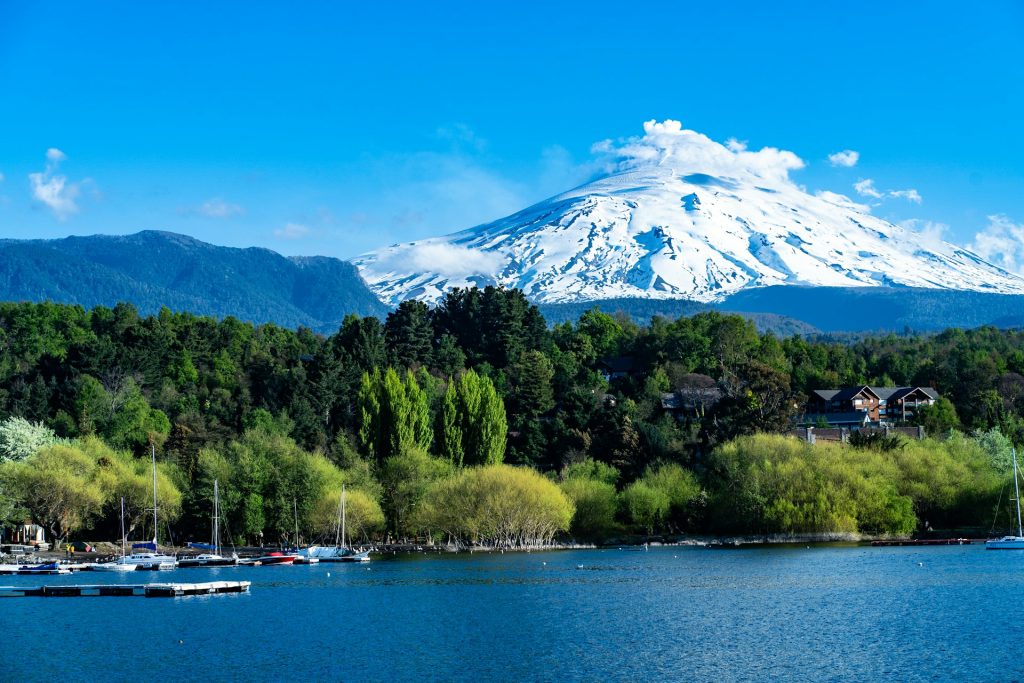
There are other towns and cities nearby that are also popular with tourists – like Villarrica, Curacautín or Temuco – but we’ll stick with Pucón. With the few hours left in your afternoon, you’ll take a stroll through the village. With its small wooden houses/cabins and mountain scenery, Pucón feels just like a European ski resort, both in looks and (touristy) atmosphere. Besides wandering aimlessly around Plaza de Armas, you can go for a swim in Playa Grande. Located along the shores of Lake Villarrica, it’s considered the main beach in Pucón. For sunset, be sure to visit the Mirador La Poza for a dramatic view of the lake and the majestic peak of Villarrica Volcano.
Thirteenth day wrap-up:
- Pucón
- Plaza de Armas
- Playa Grande
- Lake Villarrica
- Mirador La Poza
Where to eat in Chile – Best restaurants in Pucón
- Restaurant El Maderero (Chilean traditional)
- Restaurant El Fogón (Chilean traditional)
- Criolla Pucón (Chilean traditional)
- By Roots Smoke House (barbeque/”Asado”)
- Puras Pavadas (empanadas)
- Trattoria da Pietro (Italian)
- Puerto Pucón (Spanish)
- La Maga Uruguayan Steakhouse (Uruguayan)
- Just Delicious (Middle Eastern)
- Fiorentini (varied)
Chile 15-Day Itinerary: Day 14 – Pucón: Rafting, Kayaking, Trekking and Horse riding

Now that you’re all settled in, it’s time to find out whether Pucón lives up to its reputation. There are really no must-see spots or anything like that, as it all depends on which adventure activity best suits your preferences. Among the most popular options near Pucón is the chance to go rafting on the turbulent waters of the Trancura River. Assuming you’re probably not traveling with your own canoe, the best way to take part is by joining a tour, with different sections of the river better suited to various levels of experience (and courage). Alternatively, if you’re looking for a water activity that’s more scenic than extreme, your best bet is kayaking on the Liucura River.

On the other hand, if you’d prefer to stay dry and on solid ground, there’s still no shortage of popular activities. At the top of the list, and probably Pucón’s biggest highlight, is to climb up Villarrica Volcano, the majestic cone-shaped massif visible from nearly every corner of the town. For safety reasons, hiring a guide (or joining a tour) is pretty much mandatory, as the ascent to the 2850-meter summit can be quite demanding and weather conditions can change rapidly. However, aside from the physical feat, the summit rewards climbers with unobstructed panoramas of Pucón and the nearby town of Villarrica, as well as great views of the volcano’s smoking eruption fissures. If you want to get in touch with nature but aren’t up for such a challenging trek, you can instead go for a hike in Huerquehue National Park or horseback riding through the landscapes of Rancho Carhuello.
Aside from all the options mentioned above, other alternatives include canyoning in Los Nevados, visiting waterfalls along the Turbo River, Salto del Claro and Ojos del Caburgua, or exploring even more trails in Conguillío National Park. As we promised, this is indeed an outdoor enthusiast’s paradise!

Fourteenth day wrap-up:
- Trekking / Adventure Tourism
- Rafting in Trancura River
- Kayaking in Liucura River
- Climbing Villarrica Volcano
- Trekking in Huerquehue National Park
- Horse riding in Rancho Carhuello
Chile 15-Day Itinerary: Day 15 – Pucón: Day trip to Termas Geométricas

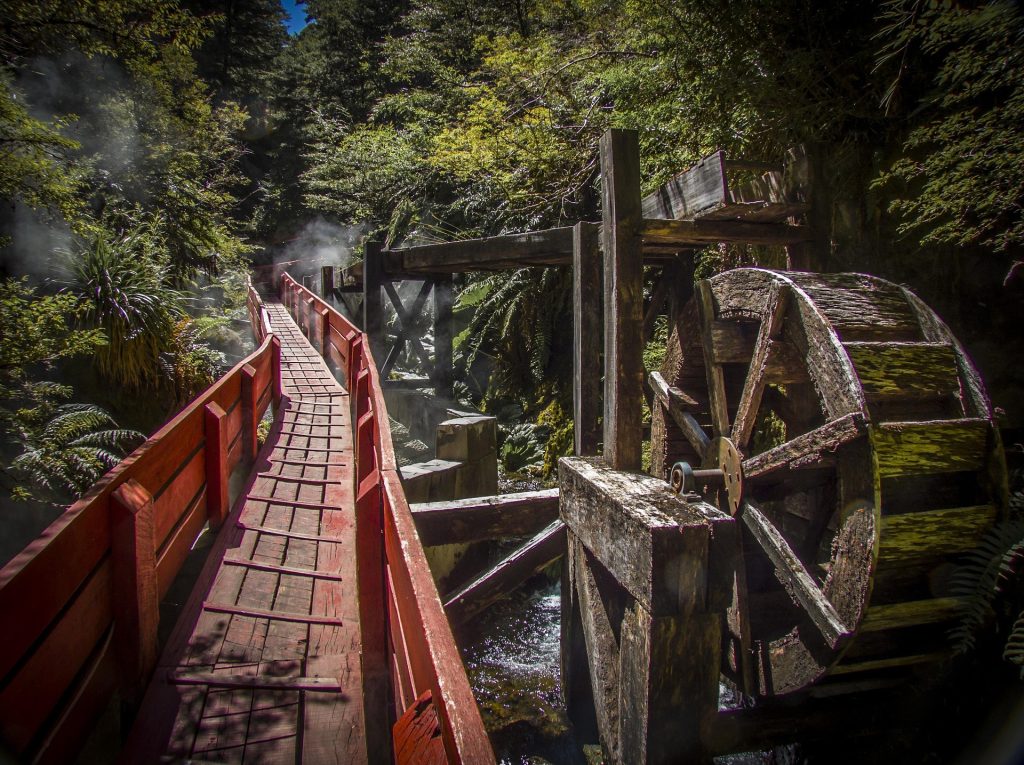
As we’ve finally come to the end of our Chile itinerary, and to make up for all the physical and logistical effort, we thought nothing would be more fitting than to reward you with a day at the hot springs. However, this is far from your average spa day, as Termas Geométricas is one of the most outstanding and underrated spots Chile has to offer. Comprised of around 20 pools with natural temperatures ranging from 30°C to 45°C, this place is especially popular due to its spectacular setting, since the pools are “hidden” in a narrow gorge between the Villarrica and Quetrupillán volcanoes, and interconnected by a scenic red wooden walkway. With the surrounding dense vegetation as the walkway leads to a waterfall, it will have you feeling as though you’ve just stumbled into a jungle. Plus, if you visit in winter, it’s not uncommon for temperature to fall below 0ºC, meaning you might find yourself soaking in hot water while snow falls around you —one of my most endearing travel memories!
Unfortunately, Termas Geométricas are still about two hours from Pucón, located in a relatively remote area with no public transport service. That means your only options are to hire a private driver or join a tour. If you’re comfortable with the prospect, you may also rent a car for the day, though be aware that parts of the road are unpaved. The entry fee to the hot springs is pretty steep ($43.000), though it’s usually included in tour packages. If you’re going independently, it’s recommended to buy your ticket online in advance. Lastly, it’s worth mentioning that wearing a swimsuit is mandatory and that you’ll need to bring your own towel. While the facility does have changing cabins, I must admit they’re quite rustic (more like a horse stable than a spa locker room). Still, this is an unforgettable experience, as well as a beautiful way to say goodbye to Chile before heading back to Santiago for your long flight back home.

Fifteenth day wrap-up:
- Termas Geométricas
Traveling soon? Get your Holafly eSIM with a 5% discount for seamless internet access in any destination. No more worrying about roaming charges or finding local SIM cards. Enjoy unlimited data and stay connected with ease. Order your Holafly eSIM now »
Heymondo offers a wide range of travel assistance insurance policies with a 5% discount. They combine the best quality, service and price with various levels of coverage, so you’re covered on your weekend getaways and long trips. Buy insurance »
Copyrighted 2026 by kamaviNET sp. z o.o. Please be aware that this article and whole website is copyrighted. No part of this publication may be reproduced, distributed, or transmitted in any form or by any means without the prior written permission of the publisher.